Letters From The Valley

“Because wisdom doesn’t expire, it echoes.”

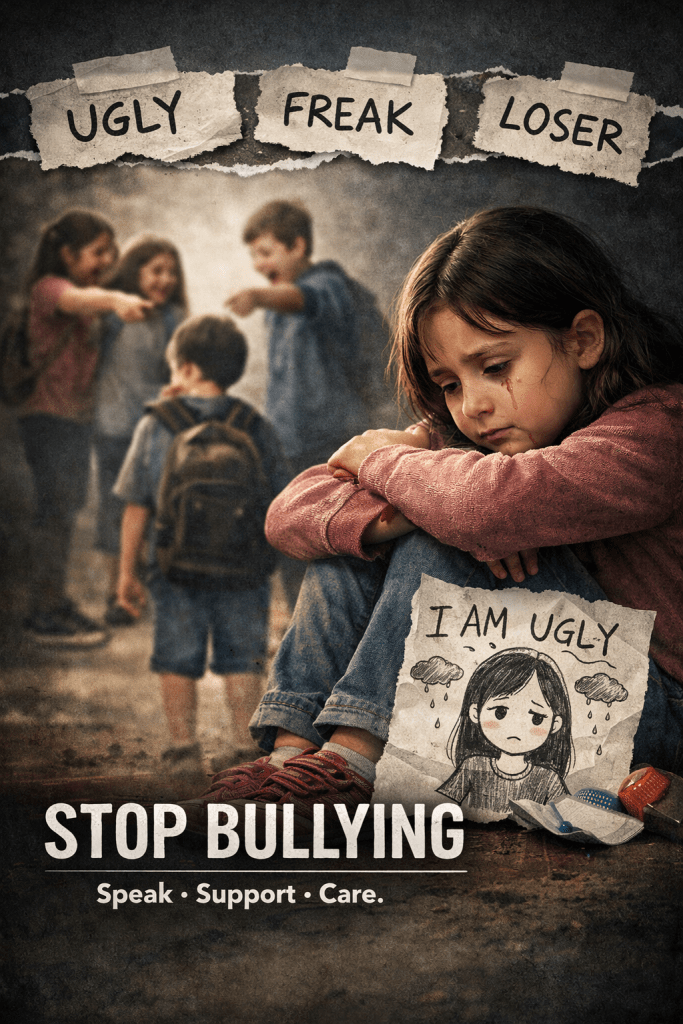
  • Every child deserves a world where their reflection feels enough.

    She was the bright one.

    Full of laughter, colour, and the kind of imagination that could turn a blank page into an adventure. But slowly, something began to change.

    Her parents noticed it in the little things. She spent more time alone. Her smile appeared less often. The drawings that once overflowed with life became filled with shadows and lonely figures.

    At first, they thought it was simply a phase.

    Then came the questions.

    “Can my crossed eye be fixed?”

    “Can I change how I look?”

    “Can I move schools?”

    The questions seemed to come from nowhere, yet they carried a weight far beyond her years.

    Her parents listened carefully and created space for her to speak.

    Eventually, the truth emerged.

    She was being bullied.

    Not because of something she had done.

    Not because of something she had said.

    Simply because she looked different.

    The teasing had become a burden she carried alone. She had convinced herself that speaking up would only create problems. So she suffered in silence, hoping the pain would somehow disappear.

    Instead, it grew.

    When her parents finally understood what was happening, they acted immediately. They worked with the school, addressed the behaviour, and ensured the matter was taken seriously.

    Most importantly, they reminded their daughter of a truth that bullying had tried to steal:

    You are enough.

    You are worthy.

    You are loved.

    What This Story Teaches Us

    Silence Has a Voice

    Children do not always tell us when they are hurting.

    More often, they show us.

    A withdrawn child.

    A fading smile.

    A sudden loss of confidence.

    A change in behaviour.

    These are often the language of pain.

    The challenge for parents is not simply to hear their children but to notice them. Sometimes the most important conversations begin when we stop talking and start paying attention.

    The Damage We Cannot See

    Words leave marks.

    When children are mocked for their appearance, they can begin to believe that who they are is somehow wrong. A passing comment from a classmate can become an internal story that follows them for years.

    African wisdom reminds us:

    “A child is not shaped by the eyes of strangers but by the hands of their people.”

    Children learn who they are from the voices they hear most often. Let those voices be filled with encouragement, affirmation, and love.

    Home Must Be a Safe Harbour

    The world can be harsh.

    Home should be the place where children find refuge.

    Not because parents have all the answers, but because children know they will be heard without judgement.

    Simple questions can reveal what a child struggles to say:

    “How was your heart today?”

    “Did anything make you feel uncomfortable?”

    “What was the best part of your day?”

    A child who feels safe speaking at home is far more likely to seek help when life becomes difficult.

    Confidence Is Grown, Not Given

    Confidence develops through encouragement, belonging, resilience, and the freedom to be imperfect.

    Scripture teaches:

    “Train up a child in the way they should go…”
    Proverbs 22:6

    African wisdom teaches:

    “A child who is loved by the village grows taller than the tallest tree.”

    Modern psychology agrees. Children thrive when they feel seen, valued, and accepted.

    When family, community, and faith work together, they create roots strong enough to withstand the storms of life.

    It Takes a Community

    Bullying is not a normal part of growing up.

    It is harmful, and it demands a response.

    Parents, teachers, schools, and communities all share responsibility for creating environments where children feel safe, respected, and valued.

    When adults work together, children are free to focus on what they should be doing: learning, growing, and discovering who they are.

    A Letter to Parents

    Your child may not always tell you what is wrong.

    But they are constantly communicating.

    Watch closely.

    Listen carefully.

    Ask gently.

    Love loudly.

    The greatest protection a child can have is knowing there is someone who will stand beside them when the world feels unkind.

    A Letter to Every Child Who Has Been Bullied

    There is nothing wrong with you.

    You do not need to change your face, your body, or your spirit to deserve kindness.

    The things that make you different may one day become the very things that make you extraordinary.

    Hold your head high.

    Your worth was never determined by the opinions of others.

    Reflection From the Valley

    Every child carries an invisible mirror.

    With every word, every action, and every response, we help shape what they see reflected back.

    May our children look into that mirror and find courage instead of shame, confidence instead of doubt, and love instead of fear.

    Because every child deserves to see themselves through the eyes of those who cherish them.

  • The world gathers once again around football’s greatest stage. Nations rise to their anthems. Children pull on jerseys that feel like armour for their dreams. In living rooms, cafés, and dusty fields across the globe, hearts lean toward the same hope.

    The World Cup has always been more than a tournament. It is humanity, in ninety‑minute form.

    But this year, before a single whistle was blown, a shadow stretched across the pitch.

    Somali referee Omar Artan, a man who spent years mastering the craft of officiating, was denied entry into the United States and prevented from taking his place on football’s biggest stage. For Somalia, this was meant to be a moment of pride, the first Somali referee to officiate at a World Cup. Instead, his journey ended at an airport terminal, far from the roar of the crowd he had earned.

    The reasons remain contested. Some cite security concerns. Others see something deeper, a moment where the values football claims to uphold were not reflected in the decisions made off the field.

    Football teaches us that talent should matter more than nationality. That merit should outweigh politics. That a child born in Mogadishu deserves the same chance as a child born in London, Sydney, or New York.

    The World Cup was created to dissolve borders, even if only for a match. To remind us that joy, skill, and passion speak a language older than flags.

    When barriers rise before the game even begins, something sacred is lost.

    Across the world, millions watched this story unfold and asked a simple question: If football cannot bring us together, then what can?

    Yet the most powerful part of this story is not the decision that stopped Omar Artan, but the response that followed. Across Africa and beyond, voices rose in solidarity. People recognised not only his talent, but the years of sacrifice, discipline, and quiet resilience that brought him to the edge of history.

    And history, as it often does, found its own way.

    Only days after his World Cup dream was taken away, UEFA appointed Omar Artan to officiate the UEFA Super Cup. A door closed in one place, and another opened, wider, brighter, and without hesitation. The whistle that was silenced on one stage will still echo on another.

    There is wisdom in that.

    Life does not always reward us fairly. Sometimes the gate closes even when we have done everything right. Sometimes opportunity slips from our hands for reasons we may never understand.

    But character is revealed in what happens next.

    The world will remember the goals scored in this tournament. It will remember the champions who lift the trophy. But many will also remember the Somali referee who carried himself with dignity when the world turned its back.

    Football deserves better. Humanity deserves better.

    And perhaps one day we will remember that the greatest victory is not lifting a cup, but lifting one another, with fairness, respect, and dignity.

    As the World Cup begins, let us celebrate the game. But let us also guard the values that make the game worth celebrating.

    For without justice, even the most beautiful game loses part of its beauty.

  • Finding grace, softness, and self again in the quiet corners of the world

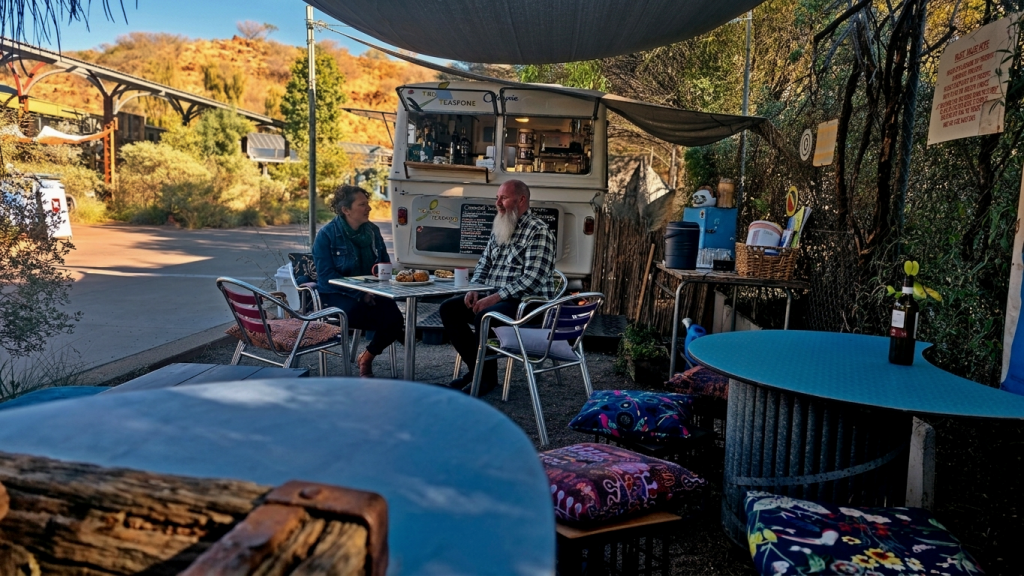
    There is a little café tucked away where no café should logically exist a little caravan café called The Twisted Teaspoon, tucked away in the forgotten ribs of an old industrial yard. Rusted steel beams rise like tired giants around it, holding memories of a busier time. The paint is weathered, and nothing about it fits the picture of what a café “should” look like.

    And maybe that’s why I love it.

    Because the moment I step in there, the world softens. Native trees sway gently in the desert breeze, their leaves whispering stories older than any building around them. Birds sit high on the rusted frames, singing as if they’ve chosen this unlikely place as their stage. Nature doesn’t wait for perfection it simply grows, sings, and lives where it feels called.

    When I walk up to the counter, the ladies greet me with warm smiles not because they know my order, but because they genuinely care. “What would you like today?” they ask, with a politeness that feels like a small kindness in a world that often rushes past itself.

    I order my skinny chai latte and take my seat, letting the spices settle into my chest like a slow exhale. And as I sit there, surrounded by rust, birdsong, and the gentle hum of life, something inside me loosens.

    This place this imperfect, unexpected, slightly crooked little café has become my refuge.

    It reminds me that beauty doesn’t always arrive dressed in symmetry. Healing doesn’t always come wrapped in grand gestures. Sometimes the soul finds rest in the places the world overlooks.

    We spend so much of our lives trying to fit into neat boxes to be polished, presentable, predictable. We hide our cracks, our tired edges, our rusted parts. We try to be the version of ourselves that looks good from the outside.

    But sitting at The Twisted Teaspoon, I’m reminded that the most meaningful things in life rarely fit the blueprint. The most comforting places are often the ones that grew out of someone’s courage to try. The most healing moments are the ones that happen quietly, without ceremony. And the most beautiful souls are often the ones who have weathered storms and still choose to offer warmth.

    There is something profoundly human about a place that doesn’t pretend to be perfect. It gives you permission to stop pretending too.

    As I sip my chai, I realise that maybe we are all a little like this café shaped by time, marked by life, standing in places we never expected to be. And yet, somehow, still offering something meaningful. Still holding space for others. Still singing our own kind of song.

    The Twisted Teaspoon teaches me this every time I visit: You don’t need to be flawless to be a sanctuary. You don’t need to be polished to be loved. You don’t need to be perfect to matter deeply.

    Sometimes the most healing places are the ones that simply allow you to be yourself.

  • When a Daughter Falls, the Village Rises.

    There are moments in life when the world feels unbearably quiet. Not the peaceful quiet of dawn, nor the sacred quiet of prayer but the heavy quiet that follows a tragedy no one wants to name.

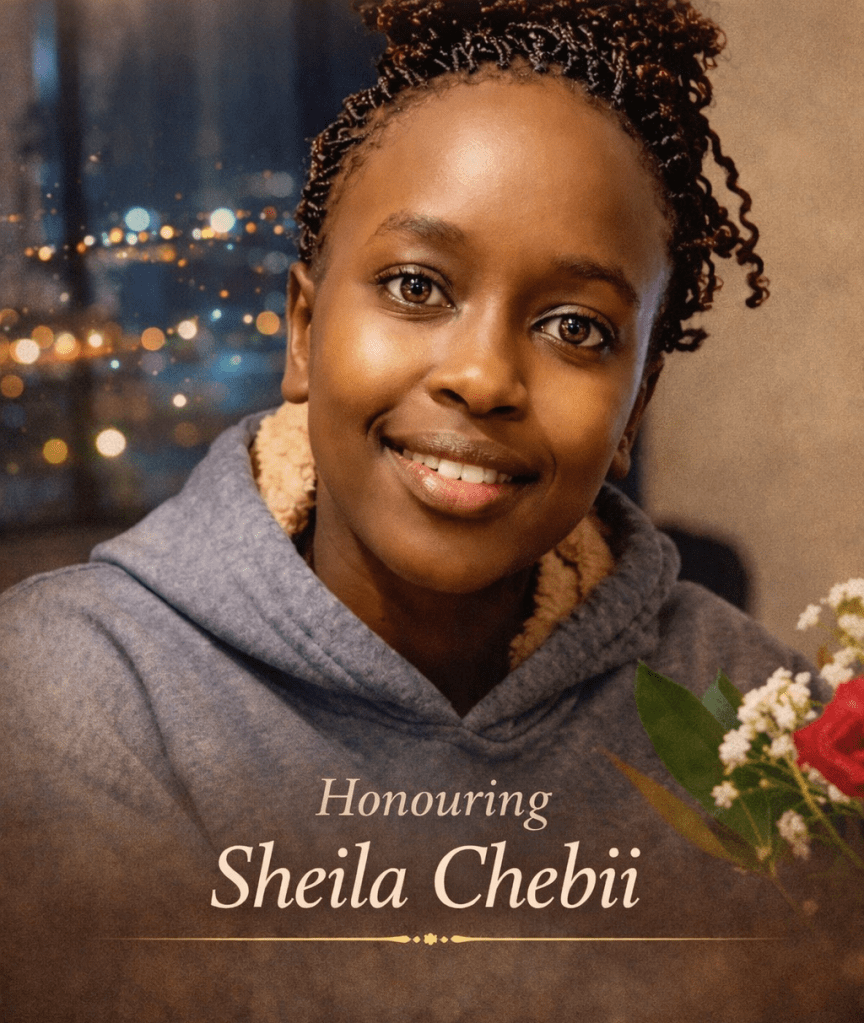
    This week, that quiet settled over our community with the news of Sheila Chebii, a young Kenyan woman who travelled to Sydney with dreams in her hands and hope in her heart. She had barely begun her new life when it was taken from her under circumstances that remain unclear, unsettling, and deeply painful.

    And yet, as her family grieves, as her community cries out, as her story spreads across Kenya and the diaspora… Australia remains silent.

    Not a single major Australian media outlet has carried her story. Not one headline. Not one investigative report. Not even a passing mention.

    A young woman dies in one of the world’s most developed nations and the silence is louder than the tragedy itself.

    When a Story Is Ignored, a People Feel Invisible

    African wisdom teaches us: “The child of the village is never buried alone.” But how do we mourn when the world refuses to acknowledge the loss?

    The absence of coverage is not just an oversight, it is a mirror reflecting a deeper truth many migrants know too well: some lives are seen, and some lives are simply tolerated.

    Psychology tells us that silence in the face of injustice creates what is called collective invalidation, a wound that spreads through a community because it signals that their pain does not matter. But our ancestors remind us: “When the drums are silent, the hearts of the people must beat louder.”

    And so we speak. We gather. We remember. We refuse to let Sheila’s story fade into the shadows.

    A Daughter of the Village

    Sheila was not just a statistic. She was a daughter, a sister, a friend, a dreamer. She was someone’s answered prayer. Someone’s pride. Someone’s future.

    She left home with courage, the kind of courage every migrant knows. The courage to start again. The courage to believe in tomorrow. The courage to trust that the world would be kind.

    Her story deserved dignity. Her life deserved honour. Her death deserved truth.

    And so, as the village, we rise.

    When the Media Is Silent, the Community Becomes the Voice

    It is Kenyan media, diaspora platforms, TikTok creators, and community advocates who have carried Sheila’s story. It is everyday people not institutions who have demanded answers. It is the village not the newsroom that has refused to let her name disappear.

    This is the power of community. This is the power of unity. This is the power of refusing to be erased.

    And this is why we march.

    A Peaceful March for Sheila – A Walk of Light

    We march not in anger, but in love. Not in hostility, but in dignity. Not to divide, but to unite.

    We march because silence is not an option. We march because justice requires visibility. We march because Sheila deserves a story told in the light, not hidden in the shadows.

    If your heart feels called, if your spirit feels stirred, if your conscience feels awakened you are welcome to join the peaceful march in her honour.

    March: #JusticeForSheila

    Leave space for her name. Leave space for her story. Leave space for the truth.

    Because Stories Like Sheila’s Deserve Light

    In the Valley, we believe that every life carries purpose. Every story carries wisdom. Every tragedy carries a call.

    Sheila’s story calls us to compassion. It calls us to unity. It calls us to justice. It calls us to remember that silence is not neutrality, it is participation.

    And so we choose to speak. We choose to stand. We choose to walk. We choose to honour her.

    May her memory be a seed that grows into justice. May her story be a flame that refuses to be extinguished. May her name be carried by the village, today and always.

    Rest in light, Sheila. Your village is rising.

  • Honouring the elders who once carried us, and now need us to carry them

    There was a time when he was the man everyone called first. The one who stood tall when others trembled. The one who provided when cupboards were empty, protected when danger came close, and disciplined with a firm but loving hand. In every family, in every community, there is a man like this a quiet giant whose strength becomes the backbone of many lives. He raised his own children, and he raised others who were not his by blood but became his by love. He was the anchor, the shield, the steady voice that said, “Everything will be alright,” even when the world was falling apart.

    But life, as it always does, turned its pages. Seasons changed. Children grew. Responsibilities shifted. And the man who once carried the weight of many now carries a different burden, one that cannot be lifted with muscle or courage alone. Retirement was supposed to be a season of rest, a time to enjoy the fruits of decades of sacrifice. Instead, it became another battlefield. A battlefield of sickness, of hospitals, of doctors who poked and prodded until he felt more like a specimen than a human being. A battlefield of long nights, quiet rooms, and the heavy silence of waiting for someone to talk to.

    Yet even in this season, he fights. His will is iron. His spirit refuses to bow. He has survived mistakes that would have broken weaker men. He has endured treatments that drained his strength but not his dignity. He has walked through the valley of illness with the same determination he once used to walk through the storms of life. He is still a warrior, just fighting a different kind of war.

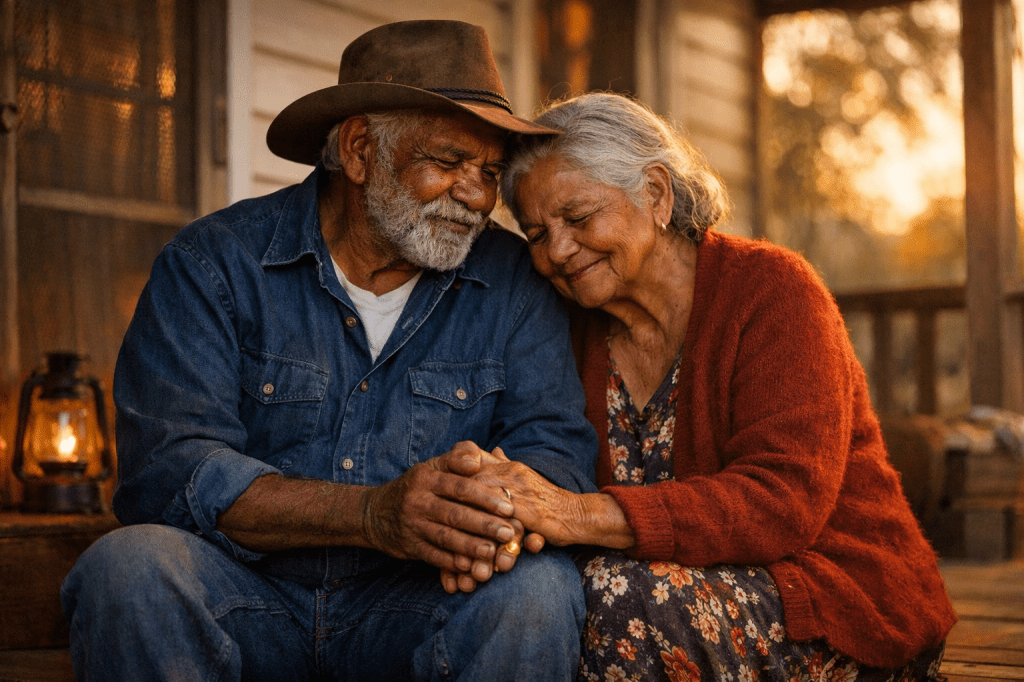
    And through it all, one person has remained by his side: his beloved wife. She has become his companion in the long hours, his comfort in the lonely moments, his steady presence when the world feels too far away. She tolerates more than she ever speaks about. She carries more than she ever complains about. She loves him with a loyalty that reflects the ancient wisdom of our elders: “When two walk together, even the storm must respect them.” He sees her sacrifices. He feels her devotion. And he appreciates her with a depth words can barely hold.

    His story is not unique, many elders are quietly fighting battles no one sees. Many sit alone in houses that once overflowed with laughter. Many wait for phone calls that never come, for visits that are always postponed, for children who have drifted into the busyness of their own lives. But his story is also different. Because he is not forgotten. His children care. They show up. They stand beside him. They honour the man who once honoured them with every breath of his strength.

    Still, his journey reminds us of something sacred: The elders who once carried us now need us to carry them. Not out of obligation, but out of gratitude. Not out of guilt, but out of love. Not because they are weak, but because they spent their strength building the very lives we enjoy today.

    In Scripture, we are taught to honour our fathers and mothers so that our days may be long. African wisdom teaches that “a community that neglects its elders has forgotten its own story.” Psychology tells us that connection ‘simple human presence’ can heal wounds medicine cannot reach. And life itself teaches us that one day, we too will stand where they stand now.

    So let this story be a gentle reminder:

    Check on your elders.

    Call them.

    Visit them.

    Sit with them.

    Listen to them.

    Love them while they can still feel it.

    Because behind every elder is a lifetime of battles fought, sacrifices made, and love given. And behind every quiet warrior is a heart that still longs to be seen, valued, and remembered.

  • There is a war many men feel but struggle to name.

    Not a war fought with tanks or bullets.
    A quieter war.
    A slow erosion.
    A thousand paper cuts to the spirit.

    It began long before our generation. Since the beginning of time, men have carried the burden of protecting, building, sacrificing, and standing in storms so others could sleep in peace. The farmer before sunrise. The soldier kissing his family goodbye. The man hiding his pain because the world told him tears are weakness.

    Yet somewhere along the road, society stopped seeing the man behind the responsibility.

    Today many men feel they are guilty before they are heard. Disposable before they are valued. Measured only by what they provide, not by who they are.

    The laws may promise fairness, yet countless fathers feel erased from their children’s lives. Good men walk through courtrooms feeling like visitors in the homes they built. Young boys grow up hearing more about “toxic masculinity” than honour, courage, discipline, or purpose.

    A strange thing has happened in modern society:
    We have become comfortable correcting men, but uncomfortable understanding them.

    A boy falls behind in school, we call him disruptive.
    A man becomes silent, we call him distant.
    A father struggles emotionally, we call him weak.
    A husband breaks under pressure, we ask why he failed.

    But rarely do we ask:
    Who carried him while he carried everyone else?

    This is not about attacking women.
    Strong women are not the enemy of strong men.
    A healthy society needs both.

    The problem is deeper than gender. It is a culture that has forgotten balance. A culture that praises men when they produce but abandons them when they bleed.

    Men are told:
    “Open up.”
    Then mocked when they do.

    Told:
    “Be vulnerable.”
    Then respected less for showing emotion.

    Told:
    “Lead your family.”
    While being stripped of authority, guidance, and identity.

    And so many men suffer quietly.

    Some bury themselves in work.
    Some disappear into addictions.
    Some isolate themselves completely.
    Some smile in public while privately fighting darkness nobody sees.

    The most dangerous phrase a man learns is:
    “I’ll deal with it alone.”

    Because isolation is where many men slowly disappear.

    But here is the truth buried beneath the noise:
    Men are not the problem to be solved.
    Men are part of the solution the world desperately needs.

    The world still needs good fathers.
    Good husbands.
    Good brothers.
    Good mentors.
    Good men with steady hands and soft hearts.

    We do not heal society by tearing men down.
    We heal society by rebuilding strong families, restoring dignity, teaching responsibility, and giving boys examples worth becoming.

    A man should not have to apologise for being masculine.
    Strength is not violence.
    Leadership is not oppression.
    Providing is not control.
    Masculinity, when guided by wisdom and love, becomes shelter.

    The answer is not rage.
    Not bitterness.
    Not revenge against society.

    The answer is rebuilding.

    Rebuilding brotherhood.
    Rebuilding faith.
    Rebuilding families around dinner tables instead of screens.
    Rebuilding the voice of fathers in homes.
    Rebuilding men who know both how to fight and how to love.

    Because a society without grounded men becomes like a ship without anchors, loud during calm waters, but dangerous when storms arrive.

    To every man carrying silent battles:
    You are seen.

    Your value is not measured only by your income, your failures, your divorce, your status, or how much pain you can hide.

    There is still honour in being a good man in a confused world.

    And perhaps the greatest rebellion today is this:
    To remain kind without becoming weak.
    To remain strong without becoming cruel.
    To lead without losing compassion.
    To love deeply in a world teaching people not to trust.

    The silent war is real.

    But so is the quiet strength of men who keep standing anyway.

  • In our darkest moments, unity becomes our light.

    There are moments when a community feels the weight of the world pressing on its chest, when the air grows still and every heart beats with the same anxious rhythm. The news of a missing five‑year‑old girl has brought such a moment upon us. It is the kind of news that shakes even the strongest among us, because the disappearance of a child touches something sacred, something universal, something deeply human. And yet, even in the heaviness of this moment, something powerful is unfolding something that reveals the true character of a people.

    Across the region, strangers are stepping forward as if they have known each other their whole lives. Volunteers are walking shoulder to shoulder with police. Families who have never met are praying the same prayers. People who may disagree on everything else are united in one purpose: bring this little girl home. This unity is not accidental. It is the echo of ancient wisdom Biblical and African reminding us that in times of crisis, the human spirit is designed to rise, not collapse.

    The Bible teaches that we are called to carry one another’s burdens, not because it is easy, but because it is the law of Christ. When a child is in danger, the entire community becomes responsible. Scripture is full of moments where God moves through ordinary people to protect the vulnerable from Moses being saved by the courage of women working together, to Jesus being protected by parents who listened to God’s guidance. These stories remind us that God often works through collective action, through the hands and feet of a united people.

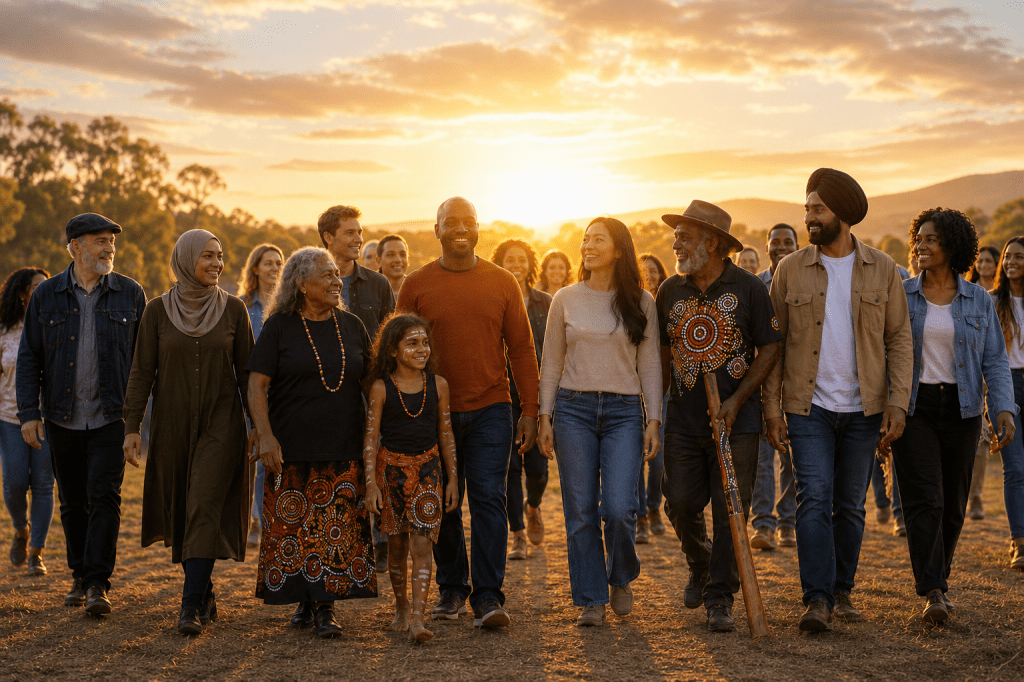
    African wisdom carries the same truth in a different language. Across the continent, elders say, “A child belongs to the village.” This is not a metaphor. It is a worldview. A child’s safety, growth, and future are the responsibility of everyone who shares the land, the stories, and the destiny of that community. When one child is missing, the entire village rises not out of obligation, but out of identity. It is who we are. It is who we have always been.

    Modern psychology confirms what our ancestors already knew. Research on collective trauma and community resilience shows that when people face a shared crisis, unity becomes a protective force. Studies published in the Journal of Community Psychology and the American Psychologist highlight that communities who come together during tragedy experience lower long‑term psychological harm and higher recovery outcomes. Shared purpose reduces fear. Collective action reduces helplessness. Hope becomes contagious. In fact, psychologists Hobfoll and colleagues (2007) found that “communal support and coordinated group action are among the strongest predictors of resilience after traumatic events.” What we are witnessing now neighbours searching together, families comforting one another, people refusing to give up is not just emotional. It is scientifically recognised as healing.

    Even in the darkest valleys, God plants seeds of light. The light is in the volunteers who wake up before dawn. The light is in the prayers whispered by people who have never met the family. The light is in the determination of police officers who refuse to rest. The light is in the hope that refuses to die, because hope is the last thing to leave the homestead, as African elders say. And the Bible echoes this truth: “Weeping may endure for a night, but joy comes in the morning.” Hope is not denial. Hope is defiance. Hope is the belief that God sees this child, knows her name, and is with her even now.

    In moments like this, we are reminded that community is not just a word it is a lifeline. Even those who cannot join the physical search are part of the village. Every prayer matters. Every act of kindness matters. Every moment spent comforting a neighbour matters. Every decision to share only verified information matters. Every expression of unity strengthens the spiritual and psychological fabric of the community.

    This is a painful moment, but it is also a revealing one. It shows that we are a people who stand together when it matters most. A people who protect their children. A people who refuse to let darkness have the final word. A people who believe that God can bring restoration even when the valley feels deep. And as long as we remain united in action, in prayer, in hope we honour the child we are searching for, we honour her family, and we honour the God who watches over the vulnerable.

    May God guide every searcher.

    May God comfort every heart.

    And may God bring this little girl home.

    Letters from the Valley.

    More information here: The Nightly

  • A journey from survival to divine restoration, where grace rewrites the ending.

    I didn’t realise how much a heart could endure until mine almost stopped under the weight of a life I never deserved. People talk about storms as if they’re poetic, but some storms are real, the kind that shake your bones, the kind that make you wonder if you’ll survive the night, the kind that leave you standing in the ruins of a life you once called home.

    I came out of a marriage that broke me in ways I still struggle to explain. There were days I felt invisible. Days I felt trapped. Days I felt like I was disappearing piece by piece. And then came the moment when everything collapsed, the moment I was left with nothing but a heartbeat and the thin, trembling thread of God’s grace holding me together.

    But that thread was stronger than it looked.

    I didn’t save myself. God did.

    He pulled me out of a place I thought would be my end. He carried me when I couldn’t walk. He whispered life back into me when I had forgotten what hope felt like. Healing didn’t come quickly. It came slowly, painfully, beautifully, like God was rebuilding me from the inside out.

    I learned to breathe again. I learned to trust again. I learned to see myself the way God had always seen me, worthy, loved, chosen.

    And when God was done healing me, when the wounds became wisdom and the scars became testimonies, He did what only He can do.

    He restored.

    Not halfway. Not barely. Not “just enough to get by.” But abundantly, the way He restored Job, not by returning what was lost, but by multiplying what was stolen.

    That’s when she came into my life.

    Not as a distraction. Not as a replacement. Not as a bandage for old wounds. But as a blessing a quiet, steady, God‑sent reminder that love was never the enemy. Brokenness was.

    She loved me with a gentleness I had never known. She spoke life into places that had only heard destruction. She treated me like a man worth choosing, worth protecting, worth loving without fear.

    Sometimes I look at her and wonder how someone like me, someone who walked through fire, ended up with a love this pure. But then I remember: This is what God does. He restores. He repays. He redeems.

    My story isn’t about the pain I endured. It’s about the God who rescued me. The God who rebuilt me. The God who gave me a partner who feels like a divine promise kept a blessing pressed down, shaken together, and running over.

    I survived the storm. But I didn’t survive it alone. God carried me through it, and on the other side, He placed a love in my life that feels like sunlight after years of darkness.

    And now I know, the enemy tried to break me, but God was preparing to bless me tenfold.

  • Wounds Become Wisdom, and Every Story Plants Hope

    Mtoto wangu (My Child),

    Tonight, as the wind stirs the palm trees outside our home and your blessed mama wa kambo (step mother) on the phone, I sit down to write with a heart heavy and hopeful a heart shaped by all the mistakes and setbacks that once seemed like proof of failure, but have now become the seeds of tomorrow’s harvest.

    There is an African proverb, old as the red earth, that says: “The river that forgets its source will dry in the sun.” In our journey, how easy it is to forget where we stumbled, where we fell, the places in our story we wish we could erase. We run from them, ashamed, afraid that to admit our failures is to admit weakness. But my child, it is the mistakes that teach the river how to flow they carve the channel, reveal the rocks, and teach the water to bend and endure.

    This week, as I reflect, what stands out is not the moments of triumph, but the setbacks that nearly ended the journey.

    I remember my first days in this valley alone, uncertain, carrying the burden of decisions that cost dearly. Friends departed, opportunities lost, promises broken not by malice but by misunderstanding. How often I wanted to hide those mistakes, to rewrite them, so your memory of me would be unclouded. But the valley itself teaches otherwise.

    You see, in African wisdom, we say: “Only the wounds that bleed can heal.”

    Each mistake, each setback, is a wound but it is also a lesson. It is the echo in your heart that whispers, “Be better next time. Speak more kindly. Listen more deeply. Learn, don’t run.”

    The world will tell you success is the building of stone upon stone, neatly laid, unbroken. The valley knows the truth: it is the cracked stones that let the flowers grow.

    My child, I watched you struggle with your assessments, face disappointment, wrestle with choices you wish you could remake. These moments painful as they are have shaped a resilience in you greater than any medal or praise. Because true greatness is never born in comfort, but in the honest embrace of our mistakes.

    Even in story, Joseph’s greatness came not when he wore the coat of many colours, but when he was cast into the pit. Mandela’s wisdom did not come from the years of celebration, but from his time in prison. And in our own faith, redemption stands at the cross a place of suffering transformed into eternal hope.

    What have I learned in my years here, and what do I wish for you?

    Never be afraid of your errors. Own them, study them, ask the hard questions:

    • What did this moment teach me about myself?
    • How can I make amends, set things right, and walk taller because of it?
    • Whose story have I hurt, and how can I lift them up now?
    • What have I learned that I must teach my family, my circle, my community, so they don’t repeat my mistake?

    Let every wound become a well where others can drink and find healing.

    Because when we refuse to learn when we bury mistakes beneath pride we rob the future of its wisdom.

    My child, you might fail again; I will fail again. We must promise each other to see failure not as the enemy, but as a companion. The ones who build a future worth living are those who plant gardens in the places they once burned.

    The valley is watching, and so are the children coming after us. Let our story be honest, our light unflinching, our embrace of the painful moments as gentle and as strong as the baobab that grows with every scar.

    May you always find courage not only in victory, but in humility and reflection.

    May you greet your setbacks like an old friend one sent to guide you toward something brighter, deeper, and truer.

    May your future hold the promise not of perfection, but of wisdom hard-won and generously shared.

    And as you journey, remember:

    It is the broken earth, after rain, that grows the sweetest roots.

    With all the love cracked, mended, enduring

    Your father in the valley.

    If this reflection gave you comfort, share it. Start a conversation. If today you feel defeated, remember, you are not alone; in this valley, every mistake is a lesson, and every lesson is a step toward a better tomorrow. Welcome to the Valley, my tribe.

  • Raise Your Voice, Plant the Seed, Even When the Soil Is Ash

    My son,

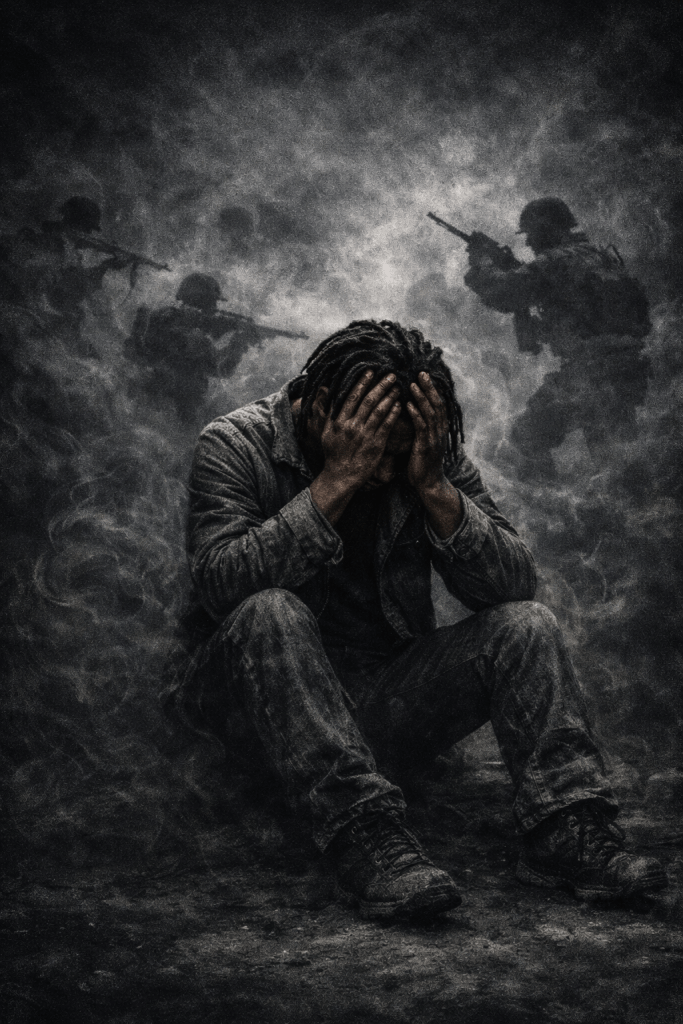
    I write to you today with the ache of a thousand sunsets that never reached their dawn. I carry in my heart the land we left behind the dry earth of home, the riverbed cracked by hunger, and the whisper of stories that once floated on the breeze. You may know me now as a man far from that place, but I was once a child of those hills of that land called Sudan, where the war now rages.

    Every day I scroll through the reel’s images of our people, in our neighbourhoods, in towns like El Fasher in Darfur, where the paramilitary force Rapid Support Forces has taken the city, and harrowing videos show unarmed civilians, bodies strewn in trenches, hospitals turned tombs. 

    I watch and I weep, for I cannot travel back, I cannot shelter them with my body, but I can shelter them with my words. I speak through this medium because the world’s media is still cloaked in silence, while the screams echo.

    In our African parable, they tell of the baobab tree that stands alone in the savannah its roots deep, its branches wide, yet when the lion comes the tree cannot run. It stands witness. So too, my son, am I witnessing. Though exiled, I carry the memory of that land. When I see men my age even younger running for their lives, I know the baobab’s stillness. The tree cannot protect the gazelle, but it endures.

    When our shepherds walked across dunes in the old stories, they spoke of the firefly that flickers alone in the night small, yes, but enough to show the path. My writing is that firefly, my son. I’ll plant a flame in this valley of grief, so someone, somewhere, will see the path to justice, to awareness. Because right now, thousands of civilians have been killed, especially in Darfur, many by summary executions. 

    I can’t carry them away, but I can carry their story across borders.

    Our departure from that home felt like the root unmooring itself from familiar soil. And yet, in that exile I learned the wind speaks different tongues. In a land far from home, I learned to listen. I learned to cry not just for us, but for all the children whose voices have vanished under gunfire. I learned that even when you flee war, you cannot abandon the wounded earth behind you. The earth remembers.

    When the Saudi Hospital in El Fasher was attacked, killing perhaps 460 patients and companions, it signalled that no sanctuary is safe any longer. 

    Do you remember the story of the ant and the elephant in the dry riverbed? The elephant said, “When I walk, the earth trembles; when you walk, the crack in the ground remains.” The ant answered: “I may be small, but I will whisper into the crack and the wind will carry my message to the far tree.”

    My son, social media reels show fighters celebrating over dead bodies, executions carried out like ceremony. The world watches but often looks away. I beseech you, do not look away. Let your heart tremble. Let your voice ripple. Even from thousands of kilometres, you can be that ant, whispering into the cracks, shaking the riverbed.

    Hope is not the absence of fear it is the courage to plant a seed while the soil still bleeds.

    I want you to know I weep for the land, yes but I also sow. I sow hope in this digital valley called “Letters from the Valley.” I sow truth, so that the next generation may breathe without the smell of gunpowder in their nostrils.

    When I watch the flames of war devour home, I remember our mother’s words “When the hyena howls at dusk, do not hide your face; let the moon witness.” So, I face the reels, I watch the reels, and I bear witness. I bear witness so that you may grow up in a world where the moon no longer witnesses such horrors in silence.

    My son, hold my hand through these words. Know that though your father stands far away, the roots of our family are still buried in that land. The valley of our birth may be bleeding but it still holds the promise of wildflowers after the storm. And though I cannot bring every child home, I will bring their stories into light.

    Let us pray together for peace, for the safe return of souls, for the day when no more children run in terror. And let us act together through our words, our platforms, our compassion for the world must know.

    If one voice can awaken a thousand hearts, then let your voice be the echo of that baobab standing strong, even when the drought seems eternal.

    With all the love of your father from far,

    Your Father in the Valley

    S. Beston